Public Health Policy
The complexity and importance of public health policy can often seem overwhelming, especially when you’re navigating the intricacies of implementation at a local, national, or global level. But don’t worry; this guide will serve as your comprehensive roadmap, demystifying the concept, offering actionable advice, and providing real-world examples to help you understand and implement public health policy effectively.
Understanding Public Health Policy
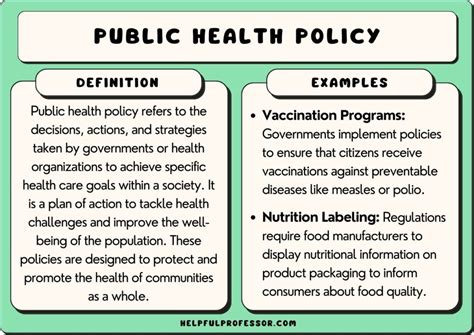
Public health policy is a series of rules, regulations, and decisions made by governments and health organizations to protect and promote public health. These policies range from vaccination mandates to guidelines for reducing pollution. The goal is to create a framework that supports the health and well-being of communities, ensuring that every individual has access to necessary health services.
Why Public Health Policy Matters
Public health policies are designed to address the root causes of health problems, rather than just treating symptoms. This approach saves lives, reduces costs, and improves the quality of life for everyone. However, the practical implementation of these policies can be challenging. That’s why understanding and addressing the needs and concerns of stakeholders, from government officials to local communities, is essential. This guide aims to provide a clear, actionable path to understanding and implementing public health policy effectively.
Quick Reference
Quick Reference
- Immediate action item: Conduct a needs assessment to understand the specific public health issues in your community.
- Essential tip: Involve key stakeholders, including local healthcare providers, community leaders, and residents, in the policy development process.
- Common mistake to avoid: Failing to align your policy with existing regulations and guidelines can lead to resistance and ineffective implementation.
Step-by-Step Guidance for Developing a Public Health Policy
Developing a public health policy requires careful planning, collaboration, and ongoing evaluation. Here’s a step-by-step guide to help you through the process.
Step 1: Identify Public Health Issues
To develop an effective public health policy, it’s crucial to first identify the pressing health issues in your community. This step involves gathering and analyzing data to pinpoint the most significant health concerns.
- Collect data from local hospitals, clinics, and health departments.
- Conduct surveys to gather information directly from residents.
- Analyze trends and patterns in health data to identify common issues.
Step 2: Engage Stakeholders
Public health policies need to address the needs and concerns of various stakeholders, including healthcare providers, community leaders, and residents. Engaging these stakeholders early in the process helps to build support and ensures that the policy addresses real community needs.
- Organize workshops and focus groups to discuss identified health issues.
- Form a task force with representatives from different stakeholder groups.
- Use social media and community bulletin boards to spread the word about your engagement efforts.
Step 3: Develop Policy Proposals
With a clear understanding of the health issues and stakeholder input, it’s time to draft policy proposals. These proposals should be specific, actionable, and supported by evidence.
- Write clear and concise policy objectives.
- Develop action plans that outline specific steps to achieve these objectives.
- Include timelines, responsibilities, and resources needed for implementation.
Step 4: Review and Revise
Before finalizing your policy, it’s essential to review and revise it based on feedback from stakeholders and experts. This step helps to ensure the policy’s effectiveness and feasibility.
- Share drafts with key stakeholders for feedback.
- Revise the policy based on constructive criticism and suggestions.
- Consult with legal and health experts to ensure the policy complies with existing laws and guidelines.
Step 5: Secure Approval
After thorough revisions, the policy needs to be approved by the relevant authorities. This step may involve presenting the policy to a government board, obtaining official endorsements, or passing it through legislative channels.
- Prepare a detailed presentation to explain the policy and its benefits.
- Engage with policymakers and officials to discuss the policy’s importance.
- Gather endorsements from respected community leaders and organizations.
Step 6: Implement the Policy
Once the policy is approved, the next step is to implement it. This involves mobilizing resources, training staff, and ensuring that everyone involved understands their roles and responsibilities.
- Develop an implementation plan with detailed timelines and responsibilities.
- Train staff and healthcare providers on the new policy and its requirements.
- Communicate with the community to inform them about the policy and how it will benefit them.
Step 7: Monitor and Evaluate
The final step is to monitor and evaluate the policy’s effectiveness. Regular monitoring and evaluation help to identify areas for improvement and ensure the policy continues to meet community needs.
- Set up a system for tracking key performance indicators (KPIs) related to the policy.
- Collect data and feedback from healthcare providers and community members.
- Conduct regular reviews to assess the policy’s impact and make necessary adjustments.
Practical Examples
To make these steps more concrete, let’s explore some real-world examples of public health policy implementation.
Example 1: Vaccination Mandate
In 2015, California implemented a policy requiring all school children to receive certain vaccinations to combat a rise in preventable diseases. Here’s how it was done:
- Identify issues: Data showed a significant increase in measles cases, particularly in schools.
- Engage stakeholders: The state health department organized meetings with school administrators, parents, and healthcare providers.
- Develop proposal: The policy mandated vaccinations for all students entering school and outlined exceptions for medical reasons only.
- Review and revise: Feedback from schools and parents led to revisions to improve clarity and address concerns.
- Secure approval: The policy was passed by the state legislature and endorsed by public health organizations.
- Implement: Schools were provided with guidelines and support for ensuring compliance.
- Monitor and evaluate: The state tracked vaccination rates and reported on disease outbreaks.
Example 2: Smoking Ban in Public Places
In 2007, New York City implemented a policy banning smoking in all public places, including bars, restaurants, and workplaces. Here’s the process they followed:
- Identify issues: Increasing evidence linked smoking to respiratory diseases and second-hand smoke exposure.
- Engage stakeholders: The city health department consulted with business owners, public health advocates, and residents.
- Develop proposal: The policy banned smoking in all enclosed public spaces and outdoor areas where food is prepared.
- Review and revise: Feedback led to adjustments to ensure compliance was manageable.
- Secure approval: The policy was passed by the city council and supported by health advocates.
- Implement: Clear signage and enforcement guidelines were established to ensure compliance.
- Monitor and evaluate: The city tracked smoking-related health issues and conducted surveys to gauge public opinion.
FAQs
How do I get community support for a public health policy?
Gaining community support involves clear communication and active engagement. Here are specific steps to follow:
- Use simple, non-technical language to explain the policy’s benefits.
- Share success stories and data that show the policy’s positive impact.
- Provide a platform for community members to ask questions and express concerns.
- Highlight how the