Creating a healthcare QA Automation Engineer resume requires a mix of technical expertise and industry-specific knowledge. The healthcare industry, with its stringent regulatory requirements and critical data handling, necessitates a meticulous and detail-oriented approach in quality assurance automation. Here’s a comprehensive guide to crafting an impressive resume that highlights your skills and experience in this niche area.
Introduction: Addressing Your Unique Needs in QA Automation for Healthcare
As a QA Automation Engineer in the healthcare sector, your role is pivotal in ensuring the quality, safety, and efficiency of medical software and systems. Unlike other industries, the healthcare field requires a deep understanding of regulatory compliance, such as HIPAA, and specialized software knowledge. This guide will provide you with step-by-step advice on how to tailor your resume to stand out in a highly competitive job market. We will cover how to effectively showcase your technical skills, industry-specific knowledge, and soft skills that make you an asset to a healthcare organization.
Quick Reference
- Immediate action item: Start by highlighting your specific healthcare experience in your professional summary.
- Essential tip: Use clear and industry-relevant metrics to demonstrate your effectiveness in past projects.
- Common mistake to avoid: Overlooking the importance of compliance-related skills or experience.
Technical Skills Highlight
As a healthcare QA Automation Engineer, your technical skill set is critical. This section should detail your proficiency with programming languages, automation tools, and specific healthcare software systems. Here’s how to make this section impactful:
Begin by listing the programming languages you are proficient in, such as Python, Java, or C#. Follow this with the automation frameworks and tools you’ve mastered, like Selenium, Appium, or TestNG. Do not forget to mention your experience with CI/CD pipelines using Jenkins or GitLab CI.
For a more advanced approach, discuss any specific healthcare software platforms you’ve automated tests for, such as Electronic Health Record (EHR) systems, patient management systems, or medical billing software. Highlight any certifications or specialized training you have in healthcare IT or regulatory compliance, such as certifications in HIPAA.
Experience and Achievements
Your professional experience section should narrate your career progression and accomplishments in a way that demonstrates your growth and expertise. Here’s how to structure it:
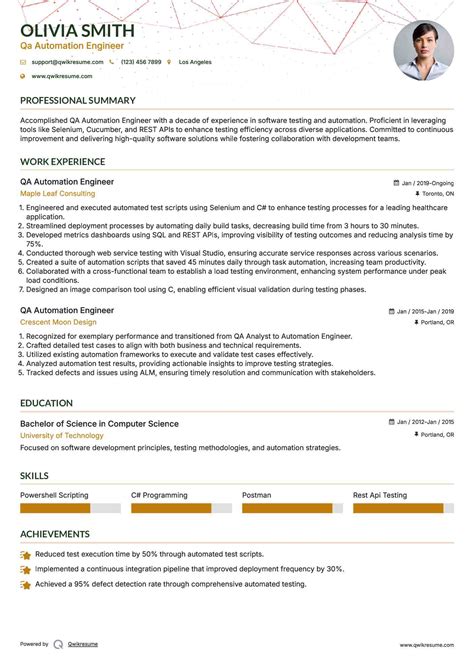
Start with your most recent role and work backward. For each position, include:
- The name of the organization and your role
- Dates of employment
- A concise description of your primary responsibilities
- Specific achievements and how you contributed to improving software quality, efficiency, or compliance
Use quantifiable achievements where possible—mention the percentage reduction in defects, improvements in test coverage, or any awards received for your work.
Quick Reference
- Immediate action item: Quantify your contributions to your past projects to show tangible impact.
- Essential tip: Tailor your achievements section to highlight tasks most relevant to the healthcare industry.
- Common mistake to avoid: Failing to clearly differentiate your healthcare-specific skills from generic QA skills.
Education and Certifications
Education is an essential part of your resume but should be balanced with your professional experience, especially if you have significant industry experience. Include:
- Your degree(s) in a relevant field, such as Computer Science, Information Technology, or Healthcare Informatics
- Any relevant certifications that demonstrate your expertise in healthcare QA automation
- Specialized training or workshops that enhance your skills in this niche
Certifications like Certified Healthcare IS Auditor (CHIA) or specialized training in healthcare regulatory compliance can greatly enhance your credibility.
Quick Reference
- Immediate action item: List certifications that highlight your specialized knowledge in healthcare.
- Essential tip: Detail any coursework or projects that focused on healthcare IT or regulatory compliance.
- Common mistake to avoid: Overlooking to include any relevant online courses or certifications.
Soft Skills and Personal Attributes
Beyond technical skills, employers look for candidates who have strong soft skills and personal attributes that will make them a valuable team member:
- Attention to detail: Highlight how your meticulous approach has led to identifying critical issues in medical software.
- Problem-solving: Provide examples of complex problems you’ve solved through your QA efforts.
- Team collaboration: Mention your experience working with cross-functional teams including developers, healthcare professionals, and compliance officers.
Personal attributes like empathy and understanding of patient-centric data handling will be crucial in this context.
FAQ Section
What is the most important skill for a healthcare QA Automation Engineer?
The most critical skill for a healthcare QA Automation Engineer is a deep understanding of healthcare regulations and compliance. This includes knowledge of laws like HIPAA that dictate how patient data must be handled. Proficiency in automation tools and programming languages is also essential, but these must be applied with an understanding of the unique challenges and requirements of healthcare IT.
How can I make my resume stand out to healthcare companies?
To make your resume stand out, focus on showcasing your specific healthcare experience, especially any projects or roles that directly involve working with healthcare software. Highlight any certifications related to healthcare IT or regulatory compliance, such as HIPAA. Additionally, tailor your resume to each job application by emphasizing the skills and experiences that are most relevant to the specific role you’re applying for.
What certifications should I pursue to enhance my career?
Certifications that can enhance your career as a healthcare QA Automation Engineer include Certified Healthcare IS Auditor (CHIA), HIPAA Compliance Certifications, and any relevant courses or training in healthcare IT or automation technologies. Additionally, certifications in specific automation tools you are proficient in can also be very beneficial.
This guide provides a comprehensive roadmap to creating a standout resume for a healthcare QA Automation Engineer position, focusing on practical examples, clear progression from basic to advanced skills, and addressing common pain points in the job search process.